Commercial MEP Plans for Restaurants, Retail, Offices, and Tenant Improvements
Learn what commercial MEP plans include for restaurants, retail spaces, offices, tenant improvements, and build-outs. PEI Engineering provides permit-ready HVAC, electrical, plumbing, and fire protection design plans for commercial projects.
MEP Engineering Is a Critical Part of Every Commercial Build-Out
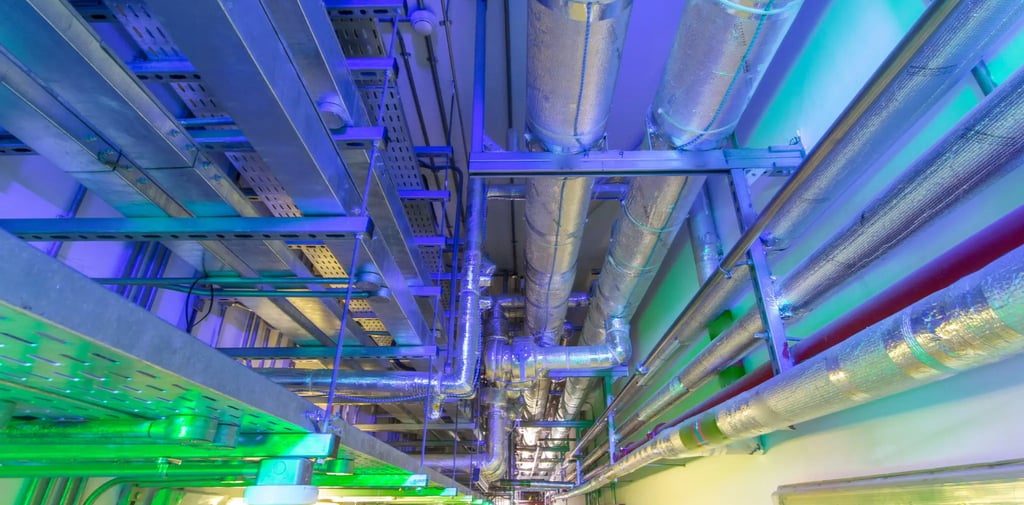
When a business owner, architect, contractor, or developer plans a commercial space, the architectural layout is only one part of the project. Behind every functional building are coordinated mechanical, electrical, plumbing, and fire protection systems that must meet code, support the business operation, and satisfy the local permitting authority.
These systems are commonly referred to as MEP:
Mechanical: HVAC, ventilation, exhaust, and heating/cooling systems
Electrical: power, lighting, panels, circuits, emergency lighting, and load calculations
Plumbing: water, waste, vent, gas piping, fixtures, and water heaters
Fire Protection: fire alarm coordination, sprinkler coordination, and life-safety systems when required
At PEI Engineering, we provide commercial MEP engineering plans for restaurants, retail spaces, offices, salons, medical suites, warehouses, tenant improvements, and commercial build-outs. Our goal is to deliver clear, coordinated, permit-ready plans that help projects move through review and into construction.
What Are Commercial MEP Plans?
Commercial MEP plans are engineering drawings and calculations used to design the building systems required for a commercial space. These plans help the contractor install the systems correctly and help the city or authority having jurisdiction review the project for code compliance.
A commercial MEP plan set may include:
HVAC layout
Mechanical equipment schedules
Ventilation calculations
Exhaust system design
Electrical power plans
Lighting plans
Lighting control plans
Panel schedules
Electrical load calculations
Plumbing fixture layouts
Domestic water piping
Sanitary waste and vent piping
Gas piping design
Water heater sizing
Fire alarm coordination
Fire sprinkler coordination
Energy code documentation
MEP notes and specifications
PE-stamped drawings when required
The exact scope depends on the building type, tenant use, existing conditions, and local permit requirements.
Tenant Improvements and Commercial Build-Outs
A tenant improvement, often called a TI, is work performed inside an existing commercial space to make it suitable for a new tenant or business use. A commercial build-out is similar and often refers to finishing or modifying an interior space so it is ready for occupancy.
Common tenant improvement projects include:
Restaurants
Coffee shops
Retail stores
Offices
Nail salons
Hair salons
Medical offices
Dental offices
Fitness studios
Daycare facilities
Small warehouses
Flex spaces
Professional service offices
Mixed-use commercial spaces
Many TI projects start with an existing shell or previously occupied space. Even if the building already has HVAC, electrical, and plumbing systems, the new business layout may require significant modifications.
For example, a retail space converted into a restaurant may need new kitchen ventilation, grease waste piping, gas piping, additional electrical loads, restroom modifications, and revised HVAC design. An office converted into a salon may need new plumbing fixtures, water heater sizing, additional receptacles, ventilation review, and electrical load coordination.
Why MEP Plans Are Required for Commercial Permits
Cities and permitting authorities typically require MEP plans to verify that the proposed work meets applicable building, mechanical, electrical, plumbing, fire, accessibility, and energy code requirements.
MEP plans may be required when a project includes:
Change of occupancy or business use
New HVAC equipment
Ductwork modifications
New exhaust systems
Commercial kitchen equipment
New electrical panels or circuits
Lighting modifications
Restroom additions or upgrades
Plumbing fixture changes
Gas piping modifications
Fire alarm or sprinkler coordination
Tenant improvements
Commercial remodels
New commercial construction
Equipment requiring dedicated power or ventilation
Permit reviewers need to understand how the space will be served by mechanical, electrical, and plumbing systems. Clear MEP drawings reduce confusion and help avoid plan review comments.
Mechanical Engineering for Commercial Projects
Mechanical engineering focuses on HVAC, ventilation, exhaust, and air distribution systems. In commercial projects, mechanical design is one of the most important parts of tenant comfort, indoor air quality, energy efficiency, and code compliance.
Mechanical plans may include:
HVAC equipment layout
Heating and cooling load calculations
Ductwork design
Supply, return, and outside air layout
Exhaust fan layout
Restroom exhaust design
Kitchen hood coordination
Makeup air coordination
Equipment schedules
Ventilation calculations
Mechanical notes and details
A proper mechanical design helps ensure the space has enough heating, cooling, ventilation, and exhaust for the intended business use.
HVAC Design and Load Calculations
Commercial HVAC systems must be sized based on the space use, occupancy, equipment loads, building envelope, ventilation requirements, and local climate conditions. Oversized systems can short-cycle and perform poorly. Undersized systems may fail to maintain comfort during peak conditions.
HVAC load calculations help determine:
Heating requirements
Cooling requirements
Airflow needs
Equipment capacity
Zoning requirements
Ventilation air requirements
System performance expectations
Different commercial uses have different HVAC needs. A small office, restaurant, salon, retail store, and warehouse will not all have the same ventilation and cooling requirements.
Ventilation and Exhaust Systems
Commercial buildings often require dedicated ventilation and exhaust systems. These systems help maintain indoor air quality, remove odors, control moisture, and comply with mechanical code requirements.
Common commercial exhaust systems include:
Restroom exhaust
Janitor closet exhaust
Kitchen exhaust
Hood exhaust
Salon exhaust
Garage ventilation
Storage room ventilation
Laundry exhaust
Mechanical room ventilation
Restaurants and food-service spaces often require additional coordination for kitchen hoods, grease exhaust, makeup air, gas-fired equipment, and fire suppression systems. These systems must be coordinated carefully because they affect mechanical, electrical, plumbing, and fire protection design.
Electrical Engineering for Commercial Projects
Electrical design provides the power and lighting systems needed for the business to operate safely and efficiently. Commercial electrical systems are usually more involved than residential systems because they may include higher loads, dedicated equipment circuits, lighting control requirements, signage, emergency lighting, and code-driven requirements.
Electrical plans may include:
Power plans
Lighting layouts
Lighting control plans
Panel schedules
Electrical load calculations
One-line diagrams when required
Service and feeder sizing
Receptacle layouts
Dedicated equipment circuits
Emergency and exit lighting
Grounding and bonding notes
Electrical details and specifications
Commercial electrical plans must be coordinated with mechanical equipment, plumbing equipment, kitchen equipment, specialty equipment, and architectural layouts.
Electrical Load Calculations
Electrical load calculations are used to determine whether the existing or proposed electrical service can safely support the tenant’s needs.
Load calculations may consider:
Lighting loads
Receptacle loads
HVAC equipment
Water heaters
Kitchen equipment
Commercial appliances
Motors
Signage
Dedicated equipment
Future capacity where required
For tenant improvements, it is common to review the existing panel and service capacity to determine whether upgrades are needed. If the existing electrical system cannot support the new tenant use, service upgrades or panel modifications may be required.
Lighting and Emergency Lighting
Lighting design is not only about brightness. Commercial lighting must consider function, energy code requirements, emergency egress, controls, and the tenant’s operation.
Commercial lighting plans may include:
General lighting
Task lighting
Exterior lighting
Exit signs
Emergency lighting
Lighting controls
Occupancy sensors
Daylight control where required
Energy code compliance
Emergency and exit lighting are especially important because they support occupant safety during power outages or emergency conditions.
Plumbing Engineering for Commercial Projects
Plumbing design includes domestic water, sanitary waste, vent piping, water heaters, gas piping, and fixture coordination. Commercial plumbing can vary significantly depending on the business type.
Plumbing plans may include:
Plumbing fixture layout
Domestic cold water piping
Domestic hot water piping
Sanitary waste piping
Vent piping
Gas piping
Water heater sizing
Floor drains
Cleanouts
Grease waste coordination
Backflow prevention notes
Plumbing riser diagrams when required
Plumbing design must be coordinated with architectural layouts, equipment locations, civil utilities, and code requirements.
Plumbing for Restaurants and Food Service Spaces
Restaurants, coffee shops, bakeries, and food-service spaces often require more detailed plumbing design than standard retail or office spaces.
Restaurant plumbing may include:
Hand sinks
Three-compartment sinks
Mop sinks
Floor sinks
Floor drains
Dishwashers
Ice machines
Grease waste piping
Grease interceptor coordination
Gas piping for cooking equipment
Water heater sizing
Backflow prevention
Restroom plumbing
Kitchen equipment connections
Restaurant projects often require close coordination between the owner, architect, kitchen equipment supplier, plumber, mechanical engineer, and local health department requirements.
Gas Piping Design
Gas piping may be required for commercial kitchens, rooftop units, water heaters, furnaces, dryers, and other gas-fired equipment.
Gas piping design may include:
Gas load calculations
Pipe sizing
Service pressure coordination
Regulator locations
Equipment connections
Shutoff valve locations
Gas riser diagrams
Coordination with utility requirements
Gas piping must be properly sized so all equipment receives the required gas flow and pressure.
Fire Protection and Life Safety Coordination
Fire protection requirements vary by project type, building size, occupancy, and local code requirements. Some projects may require fire alarm modifications, sprinkler modifications, fire-rated construction coordination, emergency lighting, or life-safety plans.
Fire protection coordination may include:
Fire alarm device coordination
Fire alarm power coordination
Sprinkler coordination
Fire riser room coordination
Occupant load coordination
Egress path coordination
Emergency lighting coordination
Kitchen hood suppression coordination
Fire department connection review where applicable
Not every project needs a full fire protection design package, but many commercial projects require some level of fire and life-safety coordination.
Commercial MEP Plans for Restaurants
Restaurants are among the most MEP-intensive tenant improvement projects. They often include kitchen equipment, exhaust hoods, grease waste, gas piping, high electrical loads, makeup air, plumbing fixtures, and fire suppression coordination.
MEP design for restaurants may include:
Kitchen hood exhaust coordination
Makeup air coordination
HVAC zoning
Gas piping design
Kitchen equipment power
Grease interceptor coordination
Plumbing fixture layout
Water heater sizing
Restroom plumbing
Lighting and controls
Emergency lighting
Fire alarm and suppression coordination
Because restaurant systems are highly interconnected, early MEP coordination is important to avoid permit delays and construction conflicts.
Commercial MEP Plans for Retail Spaces
Retail spaces may appear simple, but they still need properly designed HVAC, lighting, electrical, and plumbing systems.
Retail MEP design may include:
HVAC layout
Lighting design
Receptacle plans
Display power
Signage power
Restroom plumbing
Water heater design
Electrical load calculations
Energy code documentation
Emergency lighting
Retail projects often require fast turnaround, clear plans, and coordination with landlord requirements.
Commercial MEP Plans for Offices
Office build-outs typically require careful coordination of HVAC zoning, lighting, receptacles, conference rooms, break rooms, restrooms, and low-voltage pathways.
Office MEP design may include:
HVAC zoning
Supply and return air layout
Outside air ventilation
Lighting layouts
Lighting controls
Workstation power
Conference room power
Break room plumbing
Restroom coordination
Emergency and exit lighting
Electrical panel schedules
Office spaces must be comfortable, efficient, flexible, and code-compliant.
Commercial MEP Plans for Salons and Small Businesses
Salons, studios, medical suites, and small businesses often have unique MEP needs even when located in small tenant spaces.
Examples include:
Nail salon ventilation
Hair salon plumbing
Dedicated equipment power
Washer and dryer connections
Water heater sizing
Additional receptacles
Exhaust systems
Lighting and controls
Restroom modifications
HVAC adjustments
These projects often require practical engineering solutions that meet code without overcomplicating the build-out.
MEP Coordination With Architects and Contractors
MEP engineering works best when it is coordinated early with the architectural layout and construction team.
Architects and designers need MEP systems to fit within the space without disrupting the design. Contractors need clear drawings they can price and build from. Owners need systems that support the business operation and permit process.
Coordination may include:
Ceiling space for ductwork
Equipment locations
Rooftop unit locations
Electrical panel locations
Plumbing wall locations
Restroom fixture coordination
Kitchen equipment coordination
Fire-rated wall penetrations
Utility service coordination
Mechanical and electrical room coordination
Good coordination reduces plan review comments, field conflicts, and costly changes during construction.
Existing Conditions Matter
Many commercial projects take place inside existing buildings. Before MEP design begins, it is important to understand the existing conditions.
Existing information may include:
Current floor plan
Existing HVAC equipment
Existing ductwork
Electrical panel capacity
Existing plumbing locations
Existing gas service
Roof structure and RTU locations
Utility service points
Landlord requirements
Previous permit drawings, if available
When existing drawings are not available, site photos, contractor field notes, or site observation may be needed to understand the project.
What Information Is Needed to Start MEP Design?
To begin a commercial MEP project, it is helpful to provide:
Project address
Architectural floor plan
Proposed business use
Existing building plans, if available
Equipment list
Kitchen equipment schedule, if applicable
HVAC equipment information
Electrical panel photos
Utility information
Landlord criteria
City or permit reviewer comments
Desired construction timeline
The more complete the information is at the beginning, the faster the MEP design can be developed.
Permit-Ready MEP Plans
Permit-ready MEP plans are prepared to support plan review by the local authority. They should include the required design information in a clear and organized format.
A permit-ready MEP package may include:
Mechanical plans
Electrical plans
Plumbing plans
Fire protection coordination
Energy code notes
Equipment schedules
Panel schedules
Load calculations
Details and notes
PE stamp and seal when required
Permit-ready does not mean the plans are overly complicated. It means they include enough information for code review, contractor pricing, and construction.
Common MEP Plan Review Comments
Commercial projects often receive plan review comments when drawings are incomplete or coordination is missing.
Common review comments may request:
HVAC load calculations
Ventilation calculations
Electrical load calculations
Panel schedules
Plumbing fixture counts
Water heater sizing
Gas pipe sizing
Emergency lighting layout
Energy code compliance
Fire alarm coordination
Kitchen hood information
Grease interceptor coordination
Existing service capacity confirmation
Working with an engineering team early can help reduce avoidable comments and improve the permit review process.
Common MEP Design Mistakes
Common mistakes in commercial MEP design include:
Waiting Too Long to Involve the Engineer
Late engineering can lead to redesign, permit delays, and construction conflicts.
Using Residential-Level Assumptions for Commercial Spaces
Commercial projects have different code requirements, loads, and system demands.
Ignoring Existing Utility Capacity
Existing electrical, gas, water, or sewer capacity may not be adequate for the new tenant use.
Not Coordinating Kitchen Equipment
Restaurant equipment affects HVAC, electrical, plumbing, gas, and fire protection.
Missing Ventilation Requirements
Ventilation is a common source of plan review comments and comfort issues.
Poor Panel and Circuit Coordination
Equipment power requirements must be coordinated with electrical capacity.
Not Reviewing Landlord Requirements
Many commercial landlords have specific requirements for tenant improvements.
The Value of Integrated MEP Design
Integrated MEP design helps ensure the mechanical, electrical, plumbing, and fire protection systems work together rather than conflict with each other.
For example:
A rooftop HVAC unit needs structural support, electrical power, gas piping, condensate drainage, and controls.
A commercial kitchen hood needs exhaust, makeup air, electrical power, gas coordination, and fire suppression.
A restroom addition needs plumbing, exhaust, lighting, electrical, and accessibility coordination.
A tenant build-out may require HVAC zoning, lighting controls, emergency lighting, plumbing, and panel capacity review.
MEP systems are connected. Good design recognizes those connections early.
PEI Engineering’s Commercial MEP Services
PEI Engineering provides commercial MEP plans for a wide range of projects, including:
Restaurants
Retail stores
Offices
Tenant improvements
Commercial build-outs
Coffee shops
Salons
Medical and dental suites
Small warehouses
Flex spaces
Gas stations
Car washes
Light industrial spaces
Mixed-use tenant spaces
Our services may include mechanical, electrical, plumbing, and fire protection coordination, depending on the project scope.
Build Out Your Commercial Space With Confidence
Commercial projects move quickly, and delays can be expensive. A clear MEP plan set helps owners, architects, contractors, and plan reviewers understand how the space will function and how the systems will be installed.
Whether you are opening a restaurant, remodeling a retail space, building out an office, or preparing a tenant improvement package, proper MEP engineering helps keep the project organized, code-compliant, and ready for permitting.
At PEI Engineering, we provide practical, coordinated, permit-ready MEP plans for commercial projects of many sizes and types.
Need Commercial MEP Plans?
If you are planning a restaurant, retail space, office, salon, tenant improvement, commercial remodel, or build-out, PEI Engineering can help prepare the MEP plans needed for permitting and construction.
PEI Engineering PLLC
Structural • Civil • MEP • Inspections
Phone: 918-600-8798
Website: www.peiengineering.com
FAQ
What does MEP mean?
MEP stands for Mechanical, Electrical, and Plumbing. In commercial projects, it may also include fire protection coordination and life-safety system coordination.
Do tenant improvements need MEP plans?
Many tenant improvements require MEP plans, especially when the project includes HVAC changes, electrical modifications, plumbing work, gas piping, restroom changes, kitchen equipment, or a change in occupancy.
Do restaurants need more MEP design than other commercial spaces?
Yes. Restaurants often require more detailed MEP coordination because of kitchen exhaust, makeup air, gas piping, grease waste, plumbing fixtures, electrical equipment, and fire suppression coordination.
Can PEI Engineering provide permit-ready MEP drawings?
Yes. PEI Engineering provides permit-ready MEP drawings for commercial projects where required and where the project is located in a state where our engineers are licensed.
What information is needed to start a commercial MEP project?
Useful information includes the project address, floor plan, proposed use, equipment list, existing utility information, panel photos, landlord criteria, and any city permit comments.
Can you work directly with my architect or contractor?
Yes. PEI Engineering regularly works with architects, contractors, business owners, developers, and tenants to coordinate MEP design with the full project team.
Do small commercial spaces still need MEP plans?
Often, yes. Even small tenant spaces may need MEP plans if the project includes mechanical, electrical, plumbing, gas, restroom, or code-related changes.
Get in touch
Phone
© 2026. All rights reserved.